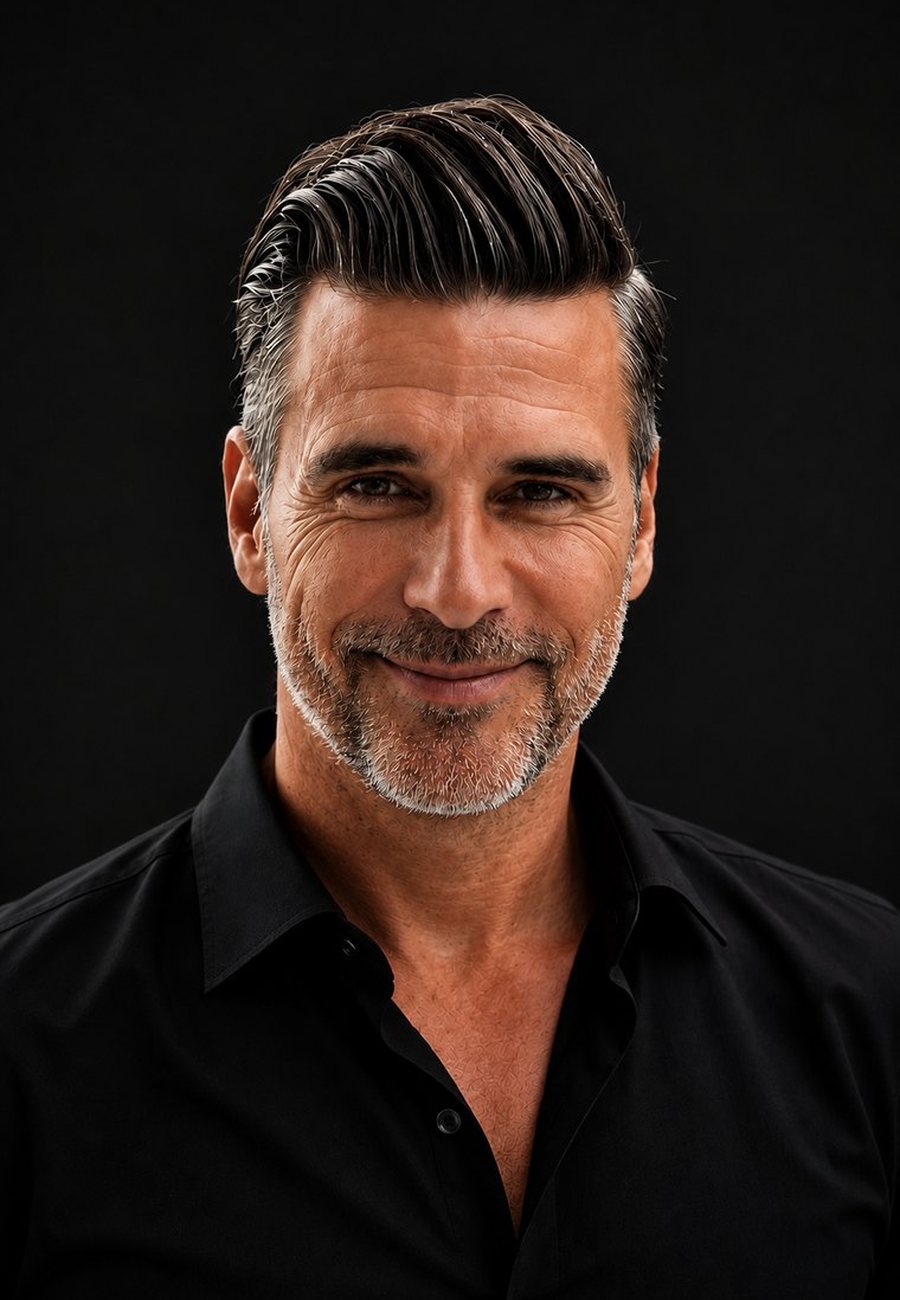
I am the one who walks it with you, not as a coach, as someone who has been where you are. First the inner work. The rest follows.
MeasureFeelEndureBuild
What remains
Nothing here was created.It was uncovered.
Vigilance
Control
Performance
Scroll to uncover
Open to everyone
The Foundation
The path of uncovering
This is not the story of my life. It is the story of the principles my life revealed.
Stories belong to a lifetime. Principles belong to everyone.
Nine chapters on the thinking everything else is built on. The film, the Standard,
the gold. It is not the Standard. It is the reason the Standard works.
Free · No account · Nothing to buy
Not a course
The Standard
This is not a course. You do not finish it.
It is not an app. It does not measure what you did. It measures what you became.
It is not one more thing to add to your life. It is the one thing built to take something away.
Every serious field runs on a standard. Athletes. Pilots. Surgeons.
We standardised almost everything, except the system making every decision beneath it.
THE REGULATED EDGE™ is that missing standard.
Measuredso you no longer have to guess.
Practisedso it survives ordinary life.
Sharedso you do not build it alone.
You do not attend it. You adopt it.
Opens at launch. Leave your name and you go first.
The world will keep offering you more. This is the one place that takes something away, and gives you back the system underneath it.
Still being made
The film and the book.
The Standard opens at launch. So do these.
Leave your name and I will write to you the day they are ready.
The second door
BEYOND
Advanced States of Consciousness
Regulated Edge is about capacity. Beyond is about access.
Six standards of expanded perception. They open once you have completed the ten. First Regulation, then Beyond.
Free · No account · Nothing to buy
The third door
RETURN
Principles in Practice
Beyond is about access. Return is about carrying it into the moments of an ordinary day.
Eight arenas of integrating Regulation, and what lies Beyond it, into the moments of an ordinary day — partner, child, work, body. First Regulation, then Beyond, and finally Return.
Free · No account · Nothing to buy
THE FOUNDATION
THE REGULATED EDGE™
The Foundation
Nine chapters · open to everyone
A Note before You Begin
A story invites you to admire someone.
A principle invites you to test it.
I have kept my own story out of these pages.
Not out of modesty. Out of usefulness.
This is not written for the person who has fallen.
It is written for the one still standing,
who has begun to feel what standing costs.
Nothing here asks for your belief.
The Standard these pages lead to begins by measuring you.
This will take longer than you have.
That is intentional.
Most of it is not meant for a screen.
The story exists. It is being made.
It is not here.
What follows is only what it taught me.
Foreword
This is not the story of my life.
It is the story of the principles my life revealed.
For many years, I believed I was building different things.
A career in law.
A life in private banking.
Companies.
A sustainable gold business.
A documentary.
A film.
A method.
I was wrong.
I was never building different things.
I was discovering the same principles through different worlds.
Law revealed structure.
Finance revealed systems.
Entrepreneurship revealed pressure.
Collapse revealed biology.
Gold revealed transformation.
The nervous system revealed the origin.
Each appeared separate.
Each became a proof.
Only much later did I understand they had never been different stories.
They were different expressions of the same reality.
This book is not the destination of that journey.
It is its foundation.
Everything that followed…
The documentary.
The Perforator, the film Barnet Bain wrote before I had lived it.
Impact Gold.
…is another expression of the same principles.
If these pages have value, it is not because they contain my ideas.
It is because they invite you to discover principles that have always been present in your own life.
The greatest ideas do not invent reality.
They reveal the principles that were there all along.
Perhaps that is what legacy truly is.
Not leaving behind your story.
Leaving behind a way of seeing.
Stories belong to a lifetime.
Principles belong to everyone.
And if, one day, these principles continue to illuminate the lives of others long after my own work is finished…
Then this book has fulfilled everything it was meant to do.
Before the First Word
Before you had language, you had a body.
Before you had a belief, you had a nervous system,
already deciding, in the dark, whether the world was safe.
You do not remember learning this.
No one does. It happened before memory,
in the years when the body was the only thing that could listen.
A child stands alone before a wall.
A ball leaves his foot.
It returns.
Again. Again. Again.
No one applauds. No one corrects him.
From the outside it looks like play.
The body knows otherwise.
Long before language,
it is already learning repetition.
Every experience left a mark.
Every mark became a prediction.
Every prediction quietly became the way you now see.
Not opinions. Reflexes, laid down before you could argue with them.
We explain people by personality, intelligence, character, will.
Underneath all of it, one older question is still running,
the one the body has asked since before you had a name for yourself:
Am I safe enough to stay open?
Every decision you have ever made passed through that question first.
Every love. Every risk. Every time you reached, or pulled back.
You thought you were choosing.
Often, a system older than your thinking had already answered.
This is not a book about becoming someone new.
It is about seeing the architecture that has been shaping you
since before you could see at all.
Because before there was a story, there was a system.
And before the system, there were principles.
The rest of this book is only an invitation to find them.
CHAPTER I
The Principle
Every system is tested.
Some break. Some transform.
Most people believe the difference is talent, intelligence, discipline.
It is not.
The difference is what stays reachable when the pressure comes.
Talent is easy to see on a calm day.
Anyone is wise, patient, clear when nothing is at stake.
The question was never who you are at rest.
It is who remains when the load arrives, and does not leave.
For a long time the answer seems to be outside.
In structure. In capital. In the next thing built.
Every success teaches something, and none of it teaches stability.
Like most people who perform, you come to believe strength means carrying more.
Working more. Sleeping less. Ignoring the signal.
Until the signal stops asking politely.
What looks like a private breakdown is often evidence.
Evidence that a human being runs on principles,
whether or not anyone has said what they are.
And then the same law appears where no one thinks to look.
Dark liquid, turning slowly. Electrodes lowered into it.
At first, nothing. Then, only through a filter,
the first grains of gold. A hint, not yet a sight.
Nothing was added.
What had always been there was finally allowed to show.
Gold, pulled from what everyone had thrown away.
Not created. Uncovered.
A human being is no different.
You are not built into someone new.
You are uncovered, slowly, by the removal of everything that was never you.
So this is not a philosophy of performance.
It is a philosophy of access.
Access to clarity while the outcome is still in doubt.
Access to calm while the pressure climbs.
Access to yourself, while everything asks you to leave.
The goal was never to feel no stress.
It is to still be there, inside it.
You were never going to be built into someone else.
Everything you needed was already here, waiting to be uncovered.
CHAPTER II
Pressure
You have been taught to treat pressure as the enemy.
Something to reduce, escape, survive.
It is none of those things.
Pressure has never destroyed anything.
A bridge does not fail because weight exists.
It fails because its structure can no longer carry the load.
The weight was never the problem.
The capacity was.
You are no different.
Our culture confuses endurance with strength.
It admires the one who never stops.
The founder who does not sleep. The parent who carries it all in silence.
The one who is always available.
From a distance it looks like resilience.
Up close it is often a system running on alarm,
convincing everyone, itself included, that this is fine.
And it works. For years, sometimes.
The work gets done. The family holds. The results even improve.
Survival is astonishingly convincing.
Right up until the day it is not.
Here is the part that changes everything.
Two people meet the same pressure.
One narrows, hardens, loses the thread.
The other steadies, sharpens, sees more.
The pressure was identical.
The system meeting it was not.
So the goal was never less pressure.
Leadership needs it. Love needs it. Growth needs it.
The goal is a system that can hold more of it
without going to war with itself.
Pressure is not asking whether you are strong.
It is asking whether your system is ready.
CHAPTER III
The Pursuit
You were taught to pursue before you were taught almost anything else.
Better grades. Better schools. Better titles. More.
And somewhere in it, without a single person saying it aloud,
you were promised that at the end there would be rest.
There is no end. And there is no rest waiting at it.
The announcement is made.
The deal closes.
The room applauds.
That evening, the house is quiet.
Tomorrow has already entered the room.
Success did not end the pressure.
It simply gave it a larger address.
Failure was never the danger.
You know how to survive failure. You have rehearsed it your whole life.
The danger is the achievement that arrives and changes nothing,
and the thought you do not say out loud:
that the next one will not change anything either.
You can read a struggling company in a glance.
You have never learned to read a struggling self.
So you keep climbing, because climbing is the one thing
that still feels like proof.
Two people stand at the top of the same field.
From the outside, identical.
One is there from clarity. The other from survival.
The world cannot tell them apart.
For a long time, neither can they.
The cost never shows up in the numbers.
It shows up in the meeting you attended and were not in.
In the win that tasted of nothing.
In the person at home who stopped expecting you to arrive.
You do not break before the summit.
You break after it,
because every height raises the demand,
and a system that cannot recover
turns each victory into the next thing it has to carry.
The pursuit is not the enemy.
The only question is whether the system beneath it
is still growing, or has quietly begun to absorb.
The risk was never failing to arrive.
It is arriving, and finding you were not there to meet yourself.
CHAPTER IV
The Collapse
You think collapse is a moment.
The diagnosis. The panic in the car. The night the body simply refused.
The marriage that ended. The morning you could not get up.
It is not a moment.
By the time it is visible, it is already old.
The collapse did not begin today.
Today was only the first day it could no longer hide.
It began years earlier, in signals so small you called them nothing.
Sleep that stopped restoring.
Patience that ran out sooner.
The book you once lost yourself in, now unreadable after a page.
The child who spoke to you twice before you heard.
Nothing dramatic. Nothing anyone would name.
You did what capable people do.
You compensated, and you were good at it,
so good that no one saw. Neither did you.
This is the trap hidden inside being strong.
The weak collapse early, and are caught.
The capable carry it further, alone, and are praised for the carrying.
The surgeon. The founder. The mother holding the whole house.
The athlete who plays through the tear.
The more you can bear, the longer no one asks whether you should.
Your body never stopped speaking.
Fatigue was a sentence. Anxiety was a sentence. The numbness was a sentence.
You learned to read every signal except the ones coming from inside you.
And somewhere along the way, something quiet happened.
What you do and who you are stopped being two things.
Rest began to feel like failure.
Stillness began to feel like danger.
Achievement stopped expressing you, and started replacing you.
Then the system did the one thing left to it.
It stopped.
Not to punish you.
To correct a course you could no longer see.
Collapse is not the end of your story.
It is the end of the strategy that could no longer carry it.
It is the first honest sentence your body has said in years.
CHAPTER V
The Foundation
For years you look for a better strategy.
More discipline. A cleaner routine. A sharper way to manage the pressure.
Some of it works. Most of it does not.
Not because the strategies are wrong,
but because they answer a question that is too small.
You have been asking how to perform better.
The real question is what kind of system is producing the performance.
Everything you do exists twice.
First inside the system. Then in the world.
You pour your effort into the second.
The first stays invisible, and decides almost everything.
A regulated system does not guarantee success.
It changes the quality of every decision that reaches for it.
How you see uncertainty. How you recover from a blow.
How you lead, listen, think, love.
Not because life gets easier,
but because the one living it is no longer running from himself.
Nature has never been confused about this.
A field rests before it yields.
The heart fills only between beats.
Sleep repays what the day spends.
Recovery is not the opposite of growth.
It is the mechanism of it.
We inverted this.
We admire output and hide rest.
We celebrate the one who endures and pity the one who stops,
as if stopping were the weakness,
when stopping is often the only intelligent move left.
Nothing alive grows in a straight line.
It grows in a rhythm. Effort and repair. Reach and return.
You were built for the rhythm, not the sprint.
This is where everything in this book begins.
Not with a technique. With a condition.
The same advice, the same chance, the same person,
lands differently depending on the state that receives it.
Change the state, and you change what is possible.
You cannot build an extraordinary life
on a system that no longer has access to itself.
CHAPTER VI
The Process
You keep waiting for the moment that changes everything.
The insight. The breakthrough. The single decision
that splits your life into before and after.
It does not come.
What comes instead is smaller, and easier to miss.
Someone sits down to be still.
Three minutes. The eyes open. He stands and walks away.
The next day, five minutes, and frustration.
A day comes when he does not even try.
Then, one day, he sits. And stays.
Nothing changed because the practice was powerful.
Everything changed because he kept returning.
This is how living things actually change.
Not in one dramatic hour.
In one small thing, repeated until the body believes it.
You ask, what can I do today to change my life.
The better question is,
what can I repeat until I no longer have to think about it.
Intensity feels like progress. It rarely is.
Consistency is unglamorous, invisible, and it is the whole game.
A company becomes its repeated behaviour.
A marriage becomes its repeated moments.
A nervous system becomes what it practises, over and over,
whether you chose the practice or not.
This is why knowing has never been enough.
You do not change because you understood.
You change because the system lived it, often enough to trust it.
This website is operated by Christophe Foro personally.
Disclaimer
The content of this website has been prepared with care. However, no guarantee is given for the accuracy, completeness or timeliness of the content. Liability for damages of a material or non-material nature arising from the use of the information provided is excluded, unless caused intentionally or through gross negligence.
This website may contain links to external websites of third parties. We have no influence on their content and accept no liability for it. The respective provider is responsible for the content of linked pages.
The controller responsible for the processing of your personal data on this website is Christophe Foro, Schärenmoosstrasse 78, 8052 Zürich, Switzerland, email hello@regulated-edge.com. This policy follows the Swiss Federal Act on Data Protection (revFADP / revDSG) and, where applicable, the EU General Data Protection Regulation (GDPR).
What we collect, and why
The notify form. When you leave your name and email to be notified at launch, we store your email address, your name (if given), the time of signup and which section you signed up from. We use this only to send you The Foundation as a PDF and to write to you once when the film and the Standard open. Legal basis: your consent.
Double opt-in. After you submit the form, we send you one confirmation email. Your address is added to our list only after you click the confirmation link. We keep the time of your confirmation as proof of your consent. Until you confirm, your entry sits in a separate pending file and is not used.
Server log files. Our hosting provider automatically records standard technical data (such as your IP address, date and time of the request, and the page requested) for the secure and stable operation of the site. This data is not combined with other data and not used to identify you.
Cookies. This site sets no tracking or advertising cookies. A single technical session cookie is set only if you log in with an access password as an invited guest; it is strictly necessary and expires when you close your browser.
No tracking
We use no analytics, no advertising networks and no social-media trackers. Fonts are loaded from Google Fonts (fonts.googleapis.com / fonts.gstatic.com); when the page loads, your IP address may be transmitted to Google LLC for this purpose. If you prefer, we can self-host the fonts so that no data is sent to Google.
Who receives your data
Hosting is provided by cyon GmbH, Basel, Switzerland; your data is processed on servers in Switzerland. Emails are sent through the hosting mail service. We do not sell your data and do not pass it to third parties for their own purposes.
How long we keep it
We keep your email address until you ask us to remove it. You can unsubscribe at any time by replying to any email from us, and we will delete your address.
Your rights
You have the right to access, correct, delete and export your data, and to object to or restrict its processing. To exercise any of these, write to hello@regulated-edge.com. You also have the right to lodge a complaint with the Swiss Federal Data Protection and Information Commissioner (FDPIC / EDÖB) or, in the EU, your local supervisory authority.
Changes
We may update this policy as the site develops. The current version always applies, with the date shown above.
When the film and the Standard open. Nothing else, and you can stop it any time.
You will get one confirmation email. Click the link in it, and the Foundation arrives as a PDF.
Private access
The full site.
For invited guests. Everything else on this page is open to everyone.
BEYOND · THE FOUNDATION
BEYOND™
The Foundation
Advanced States of Consciousness · open to everyone
Before You Begin
“Everything can be taken from you,
even your own life.
But your awareness can never die.”
THE PERFORATOR
A Word before You Begin
This book is not for everyone who is curious.
It is for the one who has done the first work.
If your system is still in alarm, turn back. Not as punishment. As physics. A system that is defending itself cannot perceive; it can only react. Regulation was never the destination. It was the price of admission to this.
You paid it, or you did not.
The first book taught you to hold. This one is about what you can see.
OVERTURE
Before You Could Perceive
Before you had a worldview, you had a filter.
The nervous system you spent ninety days regulating was never only a thermostat for stress. It was also a lens. It decided, beneath your noticing, what was even allowed to reach you: which signals became experience, and which were discarded before you ever knew they were there.
A threatened system narrows the lens. It has to. Under load it keeps only what serves survival: the threat, the exit, the next move. Everything subtler, the pattern forming three steps ahead, the thing unsaid in the room, the quiet knowing before the evidence, is filtered out as noise.
You called that „reality." It was only what a defended system could afford to let in.
And then the alarm grew quiet. And the lens widened. And you began to notice that you were noticing.
This is where the book begins. Not with a higher state. With a cleaner window.
Nothing new arrives. You simply stop filtering out what was always there.
CHAPTER I
The Second Threshold
There are two doors, and almost no one reaches the second, because almost no one walks through the first on purpose.
The first door is regulation. You know it now from the inside. Breath, sleep, the measured blood, the practiced return. It gave you a system that no longer goes to war with itself under pressure.
Most who find their way to stillness stop there, and rightly call it a gift. A calm life is no small thing.
But calm was never the point. Calm is the floor, not the ceiling. A regulated system is not merely a quieter system, it is a more capable instrument. It has bandwidth again. Attention it no longer spends on defense. And that freed bandwidth is the raw material of everything this book will ask of you.
The second door is access. What becomes possible when the instrument is no longer fighting to stay intact: to perceive earlier, to think past the obvious, to feel the shape of a situation before it has a name, and, the part that changes a life, to act while there is still time.
The first book asked: How much can you hold?
This one asks something else, and it is now the only question that matters.
How much can you perceive, and what will you do the moment you do?
CHAPTER II
The Double Gold
For many years I believed I was working on two different things.
One was metal. I built a process that recovers gold from what everyone took for waste. Not a gram is created. The gold was always in the material: hidden, bound, overlooked. Heat, separation, patience. You remove what covers it, and what remains was shining all along.
The other was a man. Myself.
Only much later did I see it had never been two things. It was one principle in two laboratories. Outside, I drew gold from waste. Inside, I went through the same process: the removal of everything that was never me, until what remained did not have to be made.
This is the double gold. And both halves carry this work.
The outer gold is the ground beneath your feet. It buys the one thing no talent can buy: independence. The freedom to devote yourself to a work without the work having to feed you. The one who is not forced to sell can tell the truth. The outer gold is not wealth. It is the permission not to lie.
The inner gold is what remains when the layers fall. Vigilance, control, performance: each was necessary once, each protected once. Together, over time, they cover what is working underneath. Take them away, and nothing new appears. Only what was always there: an attention that no longer defends itself.
They say gold is what remains when the systems break. That is true, but not in the market, where I promise you nothing. It is true in a person. When the added things fall, the title, the role, the story you told about yourself, what cannot fall shows itself. That is the only reserve no crisis touches.
Beyond is the science of the inner gold. Regulation dissolved the waste. What comes now is the uncovering of what shines.
Nothing was created. It was only no longer covered.
CHAPTER III
The Observer
There is a sentence you already know. You are not your thoughts. You are the awareness behind them.
As long as it is only a sentence, it is worth nothing. As experience it changes everything.
Most of your life you were your thoughts. Not the one who has them, the one who is them. A thought arose and you were it, completely, without distance. Fear came, and you were the fear. A judgment came, and you were the judgment. Between the content and you there was no space.
Regulation opened that space. For the first time, perhaps in a quiet moment after the breath, you noticed a thought instead of being it. A tiny distance. A millimeter. But in that millimeter is everything.
Because the one who notices is not the noticed.
That is the observer. Not another thought, not a better self, awareness itself. The space in which thoughts appear and pass, like weather across a sky that never gets wet.
You know the image, even if you never called it that. A man wakes and sees, for the first time, the code behind the world he took for real. Not a new world, the same world, finally seen. The pill he takes adds nothing; it only shows what was always running. And what he learns is not magic but a description: the one who perceives shapes what is perceived.
A character in a story a dear friend wrote for me says it more plainly still: at a certain point of awareness, what appears as magic to other people is in fact ordinary.
This is not metaphysics. It can be measured. When that network in the brain that endlessly weaves the story of „I" grows quieter, people report exactly this: less fusion with the thought, more space, more presence. The observer has a biology. I do not claim what it is at the bottom. I only say: you can learn to stand there.
And from there, what is possible changes. A thought you are fused with commands. A thought you notice only asks. Between stimulus and response a field opens, and in that field you are free for the first time.
You were never your thoughts. You were always the one who notices them.
CHAPTER IV
The Noise and the Signal
Every perception is a ratio: signal to noise.
The signal is the fine thing: the pattern forming before it is visible; the tone beneath the words; the sense that arrives earlier than the proof. The noise is everything an agitated system produces itself: the worry, the replay, the inner defense that never fully stops.
A dysregulated system has a high noise floor. Not because it is less gifted, but because it is too loud within itself to hear the quiet. The signal is there. It is only drowned out.
That is the true price of a system in alarm, and no one puts it on the bill. You see the irritability, the fatigue. You do not see what you no longer notice: the opportunity already standing in the room; the crack in the other person’s voice; the move that lay open three squares ahead.
Regulation lowers the noise floor. And the moment it grows quieter, you hear things that were transmitting all along.
This is not a psychic gift. It is restored bandwidth. When attention is no longer bound to defense, it is free for perception. The inner commentator falls silent, and to the same degree that it does, the field steps forward. Athletes know this state: when thinking stops and action happens on its own. It has a name and a biology, parts of the brain that endlessly comment and control power down, and what remains is pure, immediate perception.
And here perception becomes effect. The one who sees the signal earlier can act earlier. Not react faster, act earlier, in a window not yet open to others. To recognize situations before they explain themselves. To foster them before they tip. To set them in motion before anyone notices something is moving.
That is the practical sense of Beyond. No retreat into stillness. A head start that comes from stillness.
Lower the noise, and you hear what was always being sent.
CHAPTER V
The Depth
Beneath thinking lies a ground. Most people never touch it, because they never stop talking long enough, outward and inward.
There is an old practice that does nothing but gather attention on a single point and hold it there until the gathering itself tips into something else. First the mind grows calm. Then the calm grows stable. Then, for some, after years, a state of great clarity and stillness opens, one that used to be known only from monasteries.
Today it is measured.
Monks who have practiced ten thousand hours have been wired up, and in their brains no emptiness was found but a highly ordered, stable signature, in its deepest form a moment in which consciousness briefly ceases and returns, unharmed, often with a clarity that lasts for hours.
I do not tell you this so that you become a monk. I tell you because depth has a function no peak state replaces: it is a reference point.
Whoever has once touched the ground beneath thinking measures everything else against it from then on. Worry becomes more transparent, because you know something lies beneath it that knows no worry. Urgency loses its violence, because you know a place where nothing is urgent. You do not return to stay there. You return to know that it exists, and to recalibrate everything above it.
This is the quietest standard, and the most demanding. It asks nothing but time and return. No substance takes you there in a way you could keep; what you build here you build yourself, session by session, until the ground is no longer a secret but a place you know.
Beneath all the noise lies a ground. It was always there. You only had to grow quiet enough to enter it.
CHAPTER VI
The Vastness
Perception can open in two directions. Inward, into depth. And outward, into vastness.
The vastness has a name the language has almost forgotten: awe.
Not polite wonder. The other thing, the moment when something is so large that the usual measure no longer fits. A night sky, far from the cities. The sea, which does not care about you. Music that breaks open the chest. A child understanding something for the first time. In that moment something measurable happens: the „I" grows smaller, and the world grows larger.
Research calls it the „small self." Before something vast, preoccupation with oneself shrinks, and that shrinking is not a diminishment but a liberation. Less I, more world. Time expands. People become more generous, calmer, more connected. The body shifts into recovery. Awe is the most accessible entrance to Beyond there is, and the only one that costs nothing, demands no years, carries no risk.
You need not climb a mountain for it. You need only stop looking past everything. Much of the narrowness of a modern life is not a lack of wonders, it is a system too busy to let them in. A regulated system lets them in again.
And then there is flow, the same vastness, only in motion. When an activity demands and carries you so completely that the commentator falls silent and doing and perceiving become one. Awe opens the space in stillness; flow opens it in action. Both say the same thing: the narrow self was never the whole story.
That is the vastness. No flight from the world, a re-entry into it, with a perception finally as large as what lies before it.
The I grows smaller, and for the first time the world fits inside it.
CHAPTER VII
The Line
Now the boundary. Without detour, because you deserve an honest companion and not a salesman.
There are substances that force the doors of this book open. Psychedelics. They are real, the research is serious, and I will neither demonize nor sell them.
What is true: under controlled conditions, some of these substances show remarkable effect in severe, otherwise untreatable suffering. In Switzerland there is a narrow, sanctioned framework for this, as a last resort, medically accompanied, for people whom nothing else has helped. That is medicine, and it deserves respect.
What is equally true: the field is not the salvation some sell it as. Approvals have failed, studies have been retracted for violations. And beyond the clinic, alone, without preparation, without integration, these substances are not a door but a risk.
But my objection is deeper, and it is the core of this whole work. A substance adds. It forces a state from outside. Everything I have shown you, regulation, the observer, the depth, the vastness, rests on the opposite: uncover, do not add. What a substance shows you for hours, you must afterward build without it, or it runs through your fingers. And for a person already wide and open, the real danger is not the bad experience. It is the confirmation of a story that has already grown too large.
I know the books at the far edge, people who took hundreds of high-dose journeys and brought back whole cosmologies. I admire their courage, and I do not adopt their claims. They themselves warn against walking their path. The point where experience becomes „this is how the universe is" is the point where Beyond ends and metaphysics begins. I do not cross that line, and I advise you the same.
The way of this book is endogenous. Breath, attention, depth, stillness, awe. Slower, yes. But it is yours, it cannot be taken from you, and it demands no belief you cannot test yourself.
The door you open yourself stays open. The one you are pushed through falls shut behind you.
CHAPTER VIII
Access
What is a life of access?
Not a life of ecstasy. Not a person forever floating in wide states, that would only be a new addiction, a finer form of „more."
A life of access is more unremarkable and at the same time far larger. It is a person who most of the time seems entirely ordinary, and who in the decisive moment has more available than others. More perception. More space between stimulus and answer. More of himself.
He sees the situation earlier, because his noise is quieter. He does not lose himself in the thought, because he knows he is the one who notices it. He does not fall into panic, because he knows the ground beneath the noise. And he does not narrow onto himself, because he has already tasted the vastness. This is no superman. This is a person whose instrument is free.
And what he does with that head start decides whether it was Beyond or only vanity. Access that serves only one’s own ascent withers. Access that sets in motion something larger than oneself, a work, a person, a cause, grows. The most mature use of the wide gaze is not to get more. It is to see earlier what is needed, and to be the first to act.
Here the circle closes back to the first book. Regulation asked: How much can you hold? Beyond asks: How much can you perceive? Yet both serve a third question, which neither book asks aloud and which lies beneath everything: What for? For what do you free a system that sees more and holds more?
No book answers that question. Only a life.
Access is not what you receive. It is what you can give because of it.
A Note at the End
This time, too, I invented nothing.
I only repeated, in two laboratories, the same old process: remove what covers, and wait until what was always there shows itself.
What stands here was shown to me before I understood it. I pass it on because what is found belongs to no one. Take what you need. Test it against your own life. And if any of it holds, hand it on.
Christophe Foro
Where This Continues
This book has described the why. It has given you not a single exercise, on purpose. Understanding a thing and living it are separated by only one thing: repetition.
That is why Beyond, like the first, is a standard and not a course. Six standards, one path. The observer, awareness, the depth, flow, awe, the breath as a gate. No new knowledge. Structured experience, until the wide gaze is no longer the exception but a baseline.
And there is, as before, a story that does not explain the principles but lets you feel them before you can name them. The film begins where this book ends, not in a room full of books, but under an open dome, with a telescope aimed at something larger than us.
First you learned to hold. Then to see. What you build with it is who you became.
Welcome to what is possible.
RETURN · THE FOUNDATION
RETURN™
The Foundation
Principles in Practice · open to everyone
A Word before You Begin
A principle could be tested.
A state could be felt.
Both happened where it was easy: alone, in the breath, in the stillness.
This book takes place elsewhere.
At the table where not everyone has eaten yet.
In the room someone is still calling from.
In the meeting that has already run five minutes too long.
Nothing here is new.
It is only harder to practice, because no one applauds you for it here.
The first two books showed you what is possible.
This one shows you where it counts.
OVERTURE
Before the Return
Before you had a system, you had people waiting for you.
A partner, long before there was conflict.
A child, long before there were words.
A team, long before there was a crisis.
They never stopped waiting.
They waited while you regulated.
They waited while you found the observer.
They waited without knowing for what.
Now you know.
They were waiting for the person who comes back.
Everything that follows is only the practice of coming back.
CHAPTER I
The Return
You regulated the system.
You found the observer.
You touched, perhaps only once, the ground beneath the noise, or the vastness in which the self grew smaller.
And then you stood up and went home.
No one waited there with a measuring device.
No one asked about your pulse.
A partner waited, who had said something before you left, and still had no answer.
A child who wanted something, in the exact minute you had the least left to give.
A message from work that could not wait.
That is exactly where it is decided whether something was true, or only calm as long as no one needed anything from you.
Stillness on the cushion is easy.
Nothing contradicts it.
No one needs anything from you in that moment that you don't want to give.
The test of regulation was never the stillness.
It is the moment stillness costs something.
Two people practice the same breath, the same return, for years.
One carries it into the argument with a partner, into the room of a screaming child, into the meeting that spins out of control.
The other sets it down, like a jacket, the moment the door closes behind the practice.
From the outside, the difference shows only late.
Both speak the same way about regulation.
Both know the same words.
Only one of them has ever carried it to where it is tested.
That is the quiet deception of all inner work.
It feels like progress as long as it stays inside a protected space.
The protected space was never the goal.
It was the training ground.
You were taught to separate an inner life from an outer one.
One for working on yourself, the other for the world in which you function.
That separation was always a convenience, never a principle.
There is no system that regulates itself in the morning and defends itself at night.
There is only a system that either holds where it's needed, or doesn't.
The spouse tests it differently than the breath coach.
The child tests it differently than the stillness of the room.
The colleague tests it differently than your own conscience.
Every domain asks the same question in a different language: Are you still there when it counts, or only when it's easy?
That is why this book is not a third principle.
There is no third principle.
There is only the place where the first two either hold, or reveal themselves as theory.
The relationship, the child, the work, the body — they are not new chapters of your life.
They were always already there, and they have been waiting the whole time for you to become regulated enough to truly see them.
Nothing that follows requires a new technique.
It requires that you carry what you have found to where no one expects it of you.
CHAPTER II
The Conditioning
Before you had an opinion about your partner, you had a reaction to closeness.
It was not formed this year.
Not even in this relationship.
It was formed in a house you left long ago, by people who have long since become someone else, in moments no one remembers anymore except your body.
A child learns early how closeness feels.
Whether it holds or disappears.
Whether it comes with conditions or not.
Whether anger is dangerous or survivable.
No one teaches this.
It is not taught, it is inscribed, repeated a thousand times before it ever had a name.
Today you call it character.
You say that's just who I am, I need distance when things get tight, or I fight when I feel threatened, or I go quiet when someone raises their voice.
It sounds like a choice.
It is a reflex, so old it feels like identity.
That is conditioning.
Not what happened to you.
What your system concluded from it, and what it has decided for you ever since, before you were ever asked.
Trauma is not an event you remember.
It is a conclusion your body drew when you were too young to draw a different one.
Closeness is not safe.
Need gets punished.
Anger destroys.
Being alone is the only control that remains.
The conclusion was once correct.
It saved you then.
It simply never asks whether the room it applies to is still the same one.
That is why you sometimes react to a person standing in front of you, and in truth to one who no longer does.
An argument with a partner is rarely just an argument.
It is a moment in which an old conclusion meets a new situation, and the old one wins because it is faster.
You believe you are defending yourself against what was just said.
Often you are defending yourself against something that was never answered thirty years ago.
The pattern doesn't repeat because you want it to.
It repeats because a system always takes the path it knows, not the path that would now be right.
Repetition feels safe, even when it harms.
The familiar beats the better, almost always, as long as no one questions the conclusion itself.
Here lies a temptation this book does not follow.
Treating conditioning like a flaw that must be removed.
Like waste that belongs in the trash.
It is not waste.
It is a report.
A very old, very precise record of what was once necessary to stay safe.
You don't throw a report away because it's no longer current.
You read it, and then you know whose voice is speaking when you react.
That is the entire difference between a person who is led by their conditioning and one who knows it.
Both carry the same old conclusion inside them.
Only one still notices when it takes the floor.
And right there, not before, something begins that feels like freedom.
The conditioning has not disappeared.
But between it and your response there is, for the first time, a space large enough to choose who is really sitting at the table.
You were not conditioned in order to react forever.
You were conditioned so that one day you would recognize the difference between the report and the moment.
CHAPTER III
The Spouse
No one shows you your conditioning as precisely as the person closest to you.
A stranger cannot trigger you.
He doesn't know the door behind which the old conclusion waits.
Only someone who comes close enough to truly want something from you can accidentally knock exactly where something was left open thirty years ago.
That is why the relationship is not a side stage to your inner work.
It is its most precise instrument.
You thought the argument was about the dishwasher, the tone something was said in, the lateness that shouldn't have bothered anyone.
It's almost never about that.
The dishwasher is the surface.
Underneath lies a question your system has been asking since it could speak: Am I safe here.
Am I seen when I need something.
Does closeness disappear when I become inconvenient.
The partner doesn't answer this question.
He merely, by chance, creates the situation in which it reports back.
That is the mirror, and it is uncomfortable, because it invents nothing.
It only reflects back what was already there, long before this relationship began.
One sees in the other's withdrawal a confirmation that closeness doesn't hold.
The other sees in the first one's volume a confirmation that anger is dangerous.
Both are right, by their old numbers.
Both rarely speak to the person who is actually standing in front of them.
Without this mirror you would never see the conditioning.
Alone, in a quiet room, meditating, it is easily mistaken for peace.
It takes another person, wanting something, demanding something, failing to deliver something, for what truly lay beneath the stillness to become visible.
That is the real purpose of a close relationship, beyond love, beyond companionship.
It is the only place where conditioning cannot hide, because another person touches it daily, without knowing it.
Two paths stand open the moment this happens.
One closes the door, holds the other responsible for what rose up inside himself, and calls it self-protection.
The other holds the door open for a moment, long enough to ask: whose voice is speaking right now.
Today's, or the one from back then.
This question changes nothing about the dishwasher.
It changes everything about who is standing in the room when it's discussed.
A regulated system does not make conflict unnecessary.
Conflict belongs to every closeness that is real.
It only makes the difference between a fight that fires two old reports at each other, and one that shows two people what lies beneath their reports.
The partner is not there to heal your conditioning.
That was never his task, and it overwhelms any relationship that tries.
He is there to show it to you, every day, in small doses, at exactly the pace a system can handle once it's willing to look.
You never married the wrong person.
You married the most precise mirror there was for what still needed to be seen.
CHAPTER IV
The Child
Your child reads you before it understands you.
Long before it has words, it has already measured how your body feels when it cries.
Whether your shoulders rise when it needs you.
Whether your voice changes when it becomes too much.
It doesn't read language.
It reads a nervous system, and it reads it more precisely than you can imagine.
We call this parenting, and usually mean by it what we say.
The child rarely learns from what is said.
It learns from what is in the room while it is said.
You can preach calm with tense shoulders.
You can demand patience while your own system is already in alarm.
The child hears the words.
It believes the body.
This is co-regulation, and it is not a technique you apply.
It is a state that transmits, whether you want it to or not.
A regulated nervous system near a dysregulated child acts like an anchor.
Not through what it says.
Through what it is, while it is there.
A dysregulated system near an agitated child only amplifies what was already there, two alarms making each other louder.
Here is where the conditioning shows itself a second time, quieter than with a partner, but deeper.
A child cannot fight back, cannot leave, cannot set a boundary that gets heard.
It can only absorb.
And what it absorbs becomes its own conditioning, the report it will one day carry with it, without knowing where it came from.
That is not guilt.
It is physics.
Every system passes on what it has never resolved itself.
You will not shield your child from every storm.
That was never the task, and no parent has ever fulfilled it.
The task is smaller and harder at once: that when the storm comes, it finds, near you, a system that does not get swept away.
A child who experiences three times a day that anger is survivable, because an adult beside it stays calm, learns something no admonition could ever teach.
Anger is not the end of the world.
It passes, and closeness remains anyway.
A child who experiences three times a day that its own anger throws the adult off balance learns the opposite, without a single word ever being said for it.
You don't have to be perfectly regulated to be a good parent.
No one asks that, and the demand would be cruel.
What counts is not the absence of your own storm.
It's what comes after.
Whether you come back, show up, name the moment you weren't there yourself.
Repair teaches just as much as calm, sometimes more.
The child doesn't need a flawless parent.
It needs one who visibly finds their way back, again and again, until the finding-your-way-back itself becomes what it considers safe.
CHAPTER V
The Work
A team reads its leader the same way a child reads its parents.
No one says this out loud in a meeting.
No one would need to.
It shows in the speed with which people deliver bad news.
In whether a mistake gets admitted or hidden.
In the silence that falls when a leader enters the room tense, and in how that silence dissolves when she isn't.
Leadership is taught as a skill.
Deciding.
Delegating.
Communicating.
These are tools, and they help as long as nothing is at stake.
Under pressure, something else shows itself that no training conveys: the state of the system doing the leading.
A regulated system under pressure narrows its focus, not its thinking.
It can still listen while it decides.
A dysregulated system under pressure turns controlling, because control feels like safety when nothing else is available.
It accumulates power, not out of malice, but because a threatened system instinctively narrows, and narrowing, in an organization, always looks like micromanagement.
The team feels this difference before it can name it.
People rarely follow the smartest strategy.
They follow the state that most promises them safety.
A leader who stays regulated when the numbers are bad silently gives the whole room permission to think clearly instead of merely surviving.
Here the conditioning meets new ground for the third time.
Someone who learned as a child that mistakes get punished builds teams where mistakes get hidden, long before he notices.
Someone who learned that recognition only comes through performance builds cultures that can never perform enough, no matter how much they perform.
The organization becomes the enlarged image of the nervous system leading it, whether that is intended or not.
This is not a footnote to the work.
It is its actual architecture, invisible on every org chart.
And work tests something closeness at home tests less often: speed.
A system that only regulates at a standstill, but falls back into the old alarm under time pressure, hasn't gained much yet.
The real test of work is not the calm Monday morning.
It's the moment three things are on fire at once and a decision can't wait.
That is where it shows whether regulation was an exercise or a baseline.
Leadership that holds does not require that you never come under pressure.
It requires that you recognize when you're in it, and that you decide before the alarm decides for you.
A team rarely follows the words of its leadership.
It follows the system standing behind the words, every day, whether it wanted to be led or not.
CHAPTER VI
The Body
The body doesn't lie.
That was already true in book one, and here it shows itself even more directly, because sport knows no detour through words.
A person can tell himself he is calm while his grip cramps around the weight he should have let go of.
He can claim he listens to his body while running past the pain that body has long since reported.
Sport accepts no story.
It only measures what is actually there.
That's why it is not a counterbalance to inner work.
It is one of its most honest stages.
Two athletes train the same movement for years.
One becomes broader, clearer, more precise under competitive pressure.
The other, no weaker technically, tightens up exactly when it counts.
We call that mental strength or its absence, as though it were character.
It is physiology.
One stays in a state that allows access to his training.
The other tips into one that knows only survival, and you don't train survival away, you regulate it.
Exactly here the conditioning shows itself once more, in a form few recognize.
Someone who learned as a child that his worth depended on performance brings that old report onto the field, under the bar, to the start line.
Every competition then becomes a silent repetition of the same question that never had anything to do with sport: Am I enough if I don't win.
The body feels this question long before the mind speaks it, and it responds with exactly the narrowing that costs it whatever performance it could actually have shown.
Movement, properly understood, is not proof.
It is a conversation with the nervous system, spoken in a language nothing else speaks as clearly.
Strength shows what a system can carry without breaking.
Endurance shows how it recovers while the load continues.
A hard set, properly executed, is stress that begins and ends, with clear recovery in between, the same pattern a regulated life needs as a whole, just condensed into an hour.
Someone who learns in training to stay present under load, instead of hiding from it or disappearing into it, is practicing something that reaches far beyond sport.
The body under the bar and the person in the difficult meeting are not different systems.
It is the same system, tested in a different place.
That is the real value of movement, beyond health, beyond aesthetics.
It is the place where you can practice staying with yourself under real load, with a risk that is manageable, before life poses the same test without warning.
The body demands no justification, no story, no excuse.
It simply shows, every day, how much of what you've learned already truly belongs to you, and how much is still theory.
CHAPTER VII
The Argument
The argument is the place where everything before it comes together and can no longer hide.
The conditioning is there, because closeness always wakes it.
The partner is there, because he is the most precise mirror.
Sometimes the child is in the next room, filtering every word through its own body.
Sometimes, in an hour, comes the meeting that takes no account of the sleepless night.
And the body carries all of it, in the voice, in the shoulders, in the breath that grows shallow before the first sentence is spoken.
An argument is rarely what it presents itself as.
It is a moment in which several old reports speak up at once and fight for attention, disguised as a disagreement about something no one will remember in a week.
That is why it is not the content of an argument that decides how it ends.
What decides is how many systems in the room still have access to themselves when it begins.
Two people, both exhausted, both in alarm, have the same argument they would have resolved calmly in five minutes.
Not because the matter got more complicated.
Because no system in the room still had the bandwidth to listen instead of defend.
An argument doesn't grow large through its subject.
It grows large through the number of people who, over its course, lose connection to themselves.
This is the moment when everything learned so far either holds, or exposes itself as knowledge that was never truly practiced.
The breath you practiced alone a hundred times is now tested, while someone says something that hurts.
The observer you found in the quiet room is now tested, while a thought arises that feels like you, and isn't.
Whoever loses the space between stimulus and response here says things no one meant, and both begin holding each other responsible for what were, in truth, two old systems triggering each other, long before this person was ever in the room.
Whoever holds that space, even just one second longer than usual, does not change the argument.
He changes who is still present during it.
And that alone is often enough for an escalation to become a conversation that actually arrives somewhere.
There is no regulated person who never argues.
That would not be a sign of healing but of withdrawal, and withdrawal is itself just another old conclusion, well disguised as wisdom.
The difference shows itself elsewhere.
Not in whether the storm comes.
In whether, at the end, two people are still standing in the room who see each other, instead of two old reports that have only confirmed themselves.
The argument is not proof that the work has failed.
It is the most precise test of whether it has already begun to hold.
CHAPTER VIII
The Repetition
Nothing you have read so far changes your life on the day you read it.
It changes it on the day, many months later, when you no longer need to read it, because your system already knows it.
That is the uncomfortable truth behind every chapter of this book.
The relationship, the child, the work, the body, the argument — none of them give you a single chance to finally get everything right.
They give you the same chance, again and again, on ordinary days that don't feel like tests, but are, the whole time.
You wait for the big moment in which you prove who you've become.
It rarely comes.
What comes instead is the Tuesday evening when the child calls out for the third time while you're tired.
The meeting that drags on for the fourth time this week.
The partner who brings up something difficult exactly when you're least ready for it.
None of these moments look significant.
Together, they are the whole of life.
A system is not shaped by the one big decision everyone sees.
It is shaped by a thousand small ones no one counts.
Whether, at the child's second call, you're still there or merely functioning.
Whether, in the week's fourth difficult meeting, you're still listening or merely reacting.
Each one inconspicuous on its own.
Together, the only truth that counts.
That is why everyday life is not a place to escape the real work.
It is the only place where it actually happens.
The quiet room, the breath, the meditation — they prepare.
They are not the goal.
The goal was always the Tuesday evening.
And that is exactly why relapse is not failure.
You will grow impatient with your child again.
You will fall into an old argument with your partner again, one you thought you'd overcome.
You will lead in a controlling way again, on a day when the ground beneath you starts to shake.
That is not a refutation of the work.
It is its normal texture.
What counts is not whether the old conditioning still shows up.
It will always show up, in some form, as long as you live.
What counts is the time it now takes you to notice it, and how quickly you find your way back from there.
That time gets shorter.
Not all at once.
Over years, through repetition, through exactly the ordinary Tuesday evenings that never feel like progress while they're happening.
A regulated life is not a life without storms.
It is one in which the way back — to the partner, to the child, to your own breath — grows a little shorter each time, until eventually it is no longer an effort, but simply what you do.
A Note At The End
This time too, I invented nothing.
I only watched the same principles I found in the lab and in collapse repeat themselves at kitchen tables, in locker rooms, in meeting rooms, in the room of a screaming child at three in the morning.
The first book showed the principle.
The second showed how far perception reaches once the system becomes free.
This one shows that neither is worth anything until it arrives where no one praises you for it: at the dinner table, in the argument, in training, on an ordinary evening.
What stands here was not shown to me in stillness.
It was shown to me by the people closest to me, who had to endure me more often than I'd like, while I learned what I am passing on here.
Take what you need.
Test it where it hurts.
And if something here holds, pass it on.
Christophe Foro
Where This Continues
You have now read three books, but only one of them cannot be practiced in a quiet room.
This one.
Regulation could be measured, on day one, in your own blood.
Access could be felt, in a moment of stillness, of vastness, of observing.
Application can only be tested in one place no book controls: at your own table, with the people already there.
That is why there are no ninety days here, and no sixth standard.
There is only the repetition you are already living, now seen instead of merely endured.